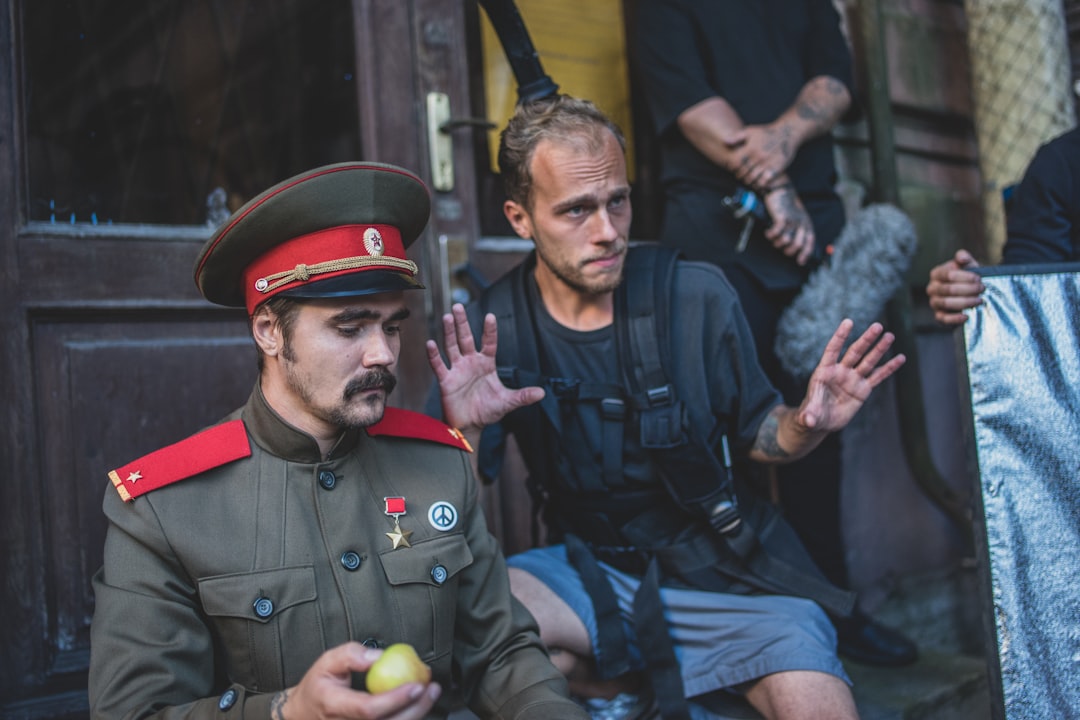
Many aspiring actors spend years trying to look convincing, only to discover that the camera exposes effort faster than it rewards it. Film and television demand something more precise and more elusive: behaviour that feels lived rather than presented. That is where Instinctual Acting for Camera becomes a turning point. IA helps actors move beyond demonstration, self-conscious choices, and rehearsed emotion into work that reads as immediate, specific, and professionally reliable on screen.
What Instinctual Acting for Camera Really Means
Despite the name, instinctual work is not careless, random, or unprepared. It is a disciplined way of acting that trains performers to respond truthfully under imaginary circumstances rather than forcing a pre-planned result. On camera, that distinction matters. The lens captures thought, hesitation, resistance, and change in real time. If an actor is pushing for an effect, the camera often catches the push before it catches the truth.
Instinctual Acting for Camera teaches actors to build scenes from intention, listening, and genuine response. Instead of deciding in advance how a line should sound, the actor learns to pursue what the character needs and allow the moment to shape the delivery. That creates performances with texture. They feel less manufactured because they are rooted in behaviour rather than display.
This approach does not reject technique; it places technique in service of life. Preparation still matters. Script analysis still matters. Understanding framing, eyelines, continuity, and the rhythm of screen storytelling still matters. The difference is that all of those tools support spontaneity instead of replacing it.
Why It Turns Aspiring Actors into Professionals
The gap between an aspiring actor and a professional actor is rarely just talent. More often, it is consistency. Professionals can arrive prepared, adapt quickly, stay emotionally available, and deliver usable work across multiple takes without becoming rigid. Instinctual training strengthens those exact qualities because it develops responsiveness instead of dependence on one rehearsed version of a scene.
That shift becomes clearer when you compare common early-career habits with the mindset expected in professional screen environments.
| Aspiring habit | Professional habit |
|---|---|
| Trying to show emotion | Playing intention and letting emotion arise from action |
| Waiting to deliver a prepared line reading | Listening closely and allowing the scene partner to affect the moment |
| Repeating one choice the same way every take | Maintaining continuity while staying fresh and adjustable |
| Performing for approval | Working truthfully inside the circumstances of the scene |
| Depending on confidence alone | Relying on craft, preparation, and responsiveness |
Directors and casting professionals are not simply looking for intensity. They need actors who can collaborate, take direction, and remain alive under pressure. An instinctual actor is easier to direct because the performance is not frozen. There is room to shift pace, raise stakes, simplify behaviour, or recalibrate tone without losing credibility.
The Camera Rewards Inner Life, Not Indication
Stage and screen both require truth, but the scale of expression is different. On camera, the smallest internal adjustment can transform a close-up. A thought landing behind the eyes can be more powerful than a dramatic gesture. This is why instinctual training is so effective for film and television: it teaches actors to trust the value of inner life.
When actors are not busy proving the scene, they begin to reveal it. Silence becomes active. A pause has meaning. A change of intention registers. The camera sees the moment an actor takes in difficult information, suppresses a reaction, or chooses not to say what they really feel. Those are professional screen instincts, and they are built through practice, not wishful thinking.
Actors often notice the difference in several practical ways:
- Auditions become stronger because the work feels less performed and more specific.
- Self-tapes improve because the camera picks up genuine shifts in thought and connection.
- Callbacks become more manageable because adjustments do not destroy the original work.
- Scenes feel more alive because the actor is reacting in the present rather than reciting a plan.
For an aspiring actor, this can be the moment everything changes. What once felt like “trying to act well” starts to become the ability to live truthfully under pressure, which is much closer to the standard required in professional productions.
How Training Develops the Actor at Instinctual Acting for Camera
Instincts in acting are not mystical gifts reserved for a lucky few. They can be sharpened through serious, repeatable training. Strong classes challenge actors to listen more deeply, commit to clear objectives, drop self-monitoring, and stay available when a scene becomes uncomfortable or unpredictable. On-camera playback is especially useful because it shows the difference between what feels big internally and what actually reads on screen.
For actors looking for acting classes in Fitzrovia, London, a focused studio such as Instinctual Acting for Camera offers a practical route into this kind of disciplined screen work. In a central creative area like Fitzrovia, that matters: the right environment can give emerging actors regular exposure to scene practice, sharper feedback, and a clearer understanding of what professional-level camera performance really demands.
A serious training process usually includes the following:
- Text work connected to action, so lines are driven by need rather than recitation.
- Listening exercises, which break the habit of waiting to speak and build real responsiveness.
- Scene repetition and adjustment, teaching actors to remain truthful across multiple takes.
- Camera-specific feedback, so performers understand framing, stillness, and screen scale.
- Audition discipline, including self-tape preparation, slate confidence, and rapid script analysis.
Training of this kind does more than improve a single performance. It reshapes how an actor works. That is why good instruction can accelerate growth so dramatically: it changes the foundation, not just the polish.
Building a Professional Mindset Beyond the Scene
Acting professionally is not only about what happens during a take. It also involves preparation, resilience, consistency, and the ability to collaborate without ego. Instinctual work supports that wider mindset because it reduces panic and over-control. Actors learn that they do not need to cling to one “perfect” reading. They need to arrive ready, connected, and capable of adjustment.
That shift is often visible in everyday working habits. Actors who are progressing from hopeful to professional tend to show the same patterns again and again:
- They analyse scripts in terms of objectives, obstacles, and relationships.
- They recover quickly after notes instead of becoming defensive.
- They understand that consistency comes from process, not from forcing emotion.
- They bring curiosity to scene partners rather than treating performance as a solo display.
- They respect timing, focus, and the practical needs of a set.
In that sense, instinctual training matures an actor from the inside out. It develops not only stronger performances, but also a stronger working identity. That is the kind of growth that casting rooms notice over time, even when it is difficult to describe in a single sentence.
Conclusion: Instinctual Acting for Camera as a Professional Standard
Instinctual Acting for Camera transforms aspiring actors because it addresses the heart of screen performance: truthful behaviour under observed conditions. It replaces showmanship with presence, pre-planned emotion with genuine response, and uncertainty with craft that can hold up under pressure. For actors serious about moving beyond potential and into professional readiness, that is not a stylistic extra. It is a standard worth pursuing. In a city such as London, where ambition is common but depth of preparation separates the field, the actors who learn to trust disciplined instinct are often the ones who begin to look, and work, like professionals.
——————-
Visit website for more details:
Instinctual Acting for Camera | Screen Acting Workshops in London | The Audition House, 129A Whitfield Street, London W1T 5EQ, UK
https://www.instinctualacting.com/
07947864909
Unleash your inner actor and tap into your instinctual talents with instinctualacting.com. Discover the power of spontaneous, authentic performance that comes from deep within. Are you ready to trust your instincts and step into the spotlight?


